This article is the start of a series of articles that will highlight a specific country, territory, state, or region and shares personal insights of those affected by the COVID-19 pandemic.
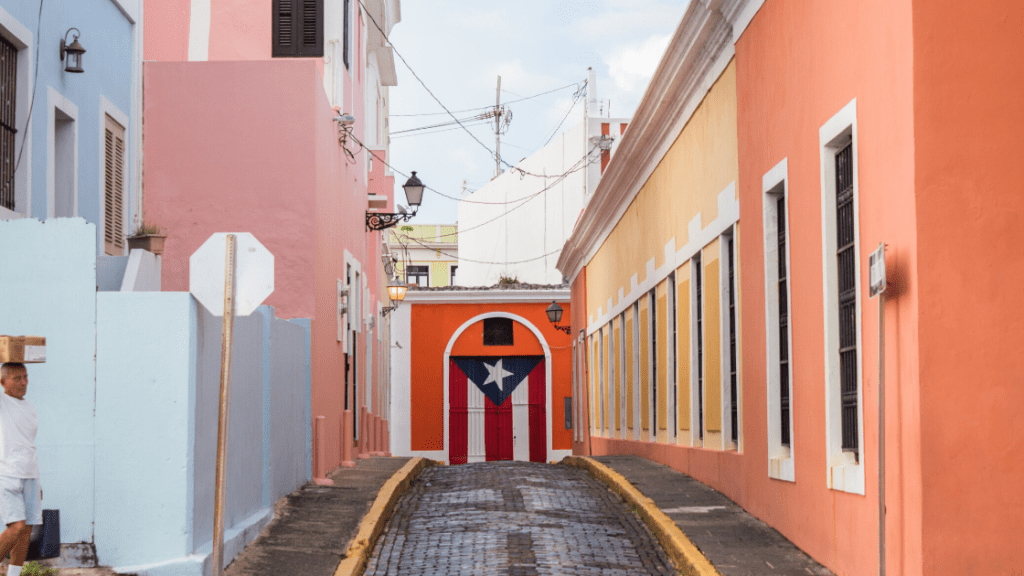
Puerto Rico- an unincorporated US territory in the Caribbean, since 1898, rich in history and culture; a vacation spot for tourists and yet for natives, a home well known to tough times.
Political scandals, earthquakes and hurricanes have plagued Puerto Rico over the years; and now COVID-19 has been added to the list. As an island that receives most of its supplies from the mainland (United States), experience has shown that such disasters present continued catastrophic economic setbacks for the Island.
We’ve been on a downward spiral since the economic recession in 2008. Hurricanes have not helped; government corruption, and tax hikes have not helped…riots and marches, earthquakes and now COVID-19.
Debbie V.
In a social society so connected yet forcing to quickly divorce the norm, the COVID-19 pandemic has shown the good, the bad and the trauma. ´We’ve been on a downward spiral since the economic recession in 2008,´ stated Debbie V., in a recent phone interview. ‘Hurricanes have not helped; government corruption, and tax hikes have not helped…riots and marches, earthquakes and now COVID-19.´ Debbie, a native Puerto Rican, not unknown to US politics, lived and worked in Illinois for many years. Eight years ago, she made her way back to Puerto Rico to be near her family.
With all the uproar and fear that the COVID-19 pandemic has caused, this national public health threat brought on a quick lockdown protocol that Governor Wanda Vázquez implemented on March 15. It was first extended to May 3, and then on April 30, Vasquez announced, via facebook live, a plan to slowly reopen the economy with a new Executive Order taking effect on Monday, May 4th.
We are on an island; if an outbreak happens here, there is nowhere for us to go.
ryan S.
Ryan S., a native of Indiana, whom has resided in Puerto Rico for almost a year, feels that the March 15 lockdown protocols seemed more effective than what initially took place in the mainland. In a phone interview, he explained their daily curfew, and the closing of the beaches, bars and restaurants.
Restaurants are only open for curbside pick up. The pharmacies and groceries stores are open. In the beginning of the lockdown (now rescinded), depending on the last number of your license plate, you could only drive on certain days. Sundays are literally a day of rest, where no one can leave the house. Fines of $5,000 are being issued out and even jail time for violating the lockdown. ‘We are on an island; if an outbreak happens here, there is nowhere for us to go,’ expressed Ryan. ‘The lockdown efforts have been good, however the lack of testing island wide has been poor thus far.’
Due to the lockdown, the economy has been brought to a halt, creating some severe economic impacts on the island with a population of more than 3.2 million people. According to a consulting firm, Inteligencia Económica Inc., estimated that the direct economic impact of the crisis could amount to $8.4 billion, as of May 3.
As reported in the Caribbean Business, the Secretary of the Department of the Treasury, Francisco Parés-Alicea, informed the population that, due to the CARES Act, some 486,000 Puerto Rico residents will begin to receive an email informing them that they are eligible to automatically receive the $1,200 in federal aid, once approval of the distribution plan is received from the US Treasury. As of May 1, Governor Vasquez’s facebook page shared that they received approval, and the stimulus funds should reach bank accounts as soon as this weekend.
Furthermore, under the provision of the CARES Act, Gov. Vázquez and the Secretary of Labor and Human Resources, Briseida Torres Reyes, announced that as of April 25, people receiving unemployment benefits will start receiving an additional $600 weekly unemployment compensation. This means an increase on the current weekly unemployment compensation of $190 to a maximum of $790 weekly.
As well, on May 1, it was announced that Puerto Rico was allocated $42.8 million from the U.S. Department of Housing and Urban Development (HUD), for COVID-19 relief funding to help public housing residents better withstand the pandemic. Such funding would go towards PPE, childcare costs, and travel costs to receive testing.
We have not lost our faith. We have not lost our resiliency.
Debbie V.
As federal dollars trickle into Puerto Rico, recent corruption scandals have not yet been forgotten. In January of 2020 a warehouse was found, which stored expired emergency food and aid dated back to 2017, during Hurricane Maria relief efforts. This caused a second wave of strikes and unrest on the island against the government, and resulted in several government officials being fired. There has been some recent controversy in regards to retreiving COVID-19 testing on the island. Unfortunately, the misuse of aid and funds given to the government, doesn’t surprise Puerto Ricans, yet it does adversely affect them in a drastic way.
According to Debbie, ‘We are well prepared for hurricanes, but not prepared for major disasters such as recent earthquakes or this pandemic outbreak… we seem to always be on alert for the worst thing to happen.’ Just on May 2, southern Puerto Rico suffered a 5.4 magnitude earthquake causing power outages and damaged buildings. Thus the recovery efforts continue to expand on the island during this time of lockdown.
Furthermore in the phone interview, Debbie mentioned the impacts of the Jones Act on Puerto Rico. In a nutshell, the Jones Act, also known as the Merchant Marine Act of 1920 was enacted after WWI, with the goal of employing Americans and growing a strong maritime commerce presence. It mandates the use of US vessels when transporting goods from one US port to another, while ensuring 75% of the employees being US citizens. This Act applies to Puerto Rico as well, which in turn presents challenges to its economy, especially during times of crisis.
Debbie explained that Puerto Rico receives the majority if its supplies from the mainland port in Jacksonville, Florida, thus causing the price of shipping products, goods, food and supplies to be increased. In times where supply is low and demand is high, the inflated costs in Puerto Rico takes a toll on its citizens and businesses.
According to the US Department of Homeland Security website, three Jones Act waivers were implemented in 2017 to relieve shipping costs of supplies and ‘to facilitate the movement of refined petroleum products’ for a number of States affected by Hurricanes Harvey, Irma and Maria. This initiative was brought forth by the Secretary of the Department of Defense, Acting Assistant Secretary of the Department of Energy, and was approved by the Acting Secretary of the Department of Homeland Security, in the interest of national defense, in which Puerto Rico also benefited.
Some political factors have shown support in presenting a waiver during this time of the pandemic, and or getting rid of the Jones Act overall. As well other political factors have shown support in keeping the Jones Act for the sake of national security, in order to not lose control over maritime trading efforts to foreign vessels. Thus it remains a controversial issue, especially considering the recent price of oil surging below zero on April 20. Even though the price of oil has raised since then, the Jones Act may be back on the table for review.
Nevertheless, Debbie continues to pray that her people are able to get the relief, and even now during COVID-19, to get the testing that is needed in a timely and proper way, without the political costs of the Jones Act and without the continued atmosphere of corruption in the Puerto Rican government. ‘We have not lost our faith. We have not lost our resiliency,’ she said.
According to a CyberNews article, the executive director of the Fiscal Control Board, Natalie Jaresko, announced they provided the government of Puerto Rico with recommendations on how to spend the $2.2 billion allocated to the Island through the CARES Act, in order to finance non-budgeted expenses related to the pandemic ‘in a way that is consistent, efficient, and transparent.’ Jaresko shared that it would provide much needed support to mitigate, contain and minimize the effect of COVID-19 on the lives of the people of Puerto Rico and the Puerto Rican economy, if used strategically now until December 2020.
Wash your hands, wear gloves and a mask when you leave the house.
Ryan S.
It is good news to know that federal funds are available to assist Puerto Rico, since there has been over 1,500 confirmed cases of COVID-19 and 94 deaths as of May 1. Of those confirmed cases earlier in the crisis was Ryan, who officially tested positive for COVID-19 on April 2.
Ryan noticed he had symptoms since March 15, the day of the lockdown. When he went to his local health clinic, the medical community had mistaken it to be Dengue Fever, a tropical disease transmitted by mosquitos, which shares the same symptoms of COVID-19. Though not much was known at the time about COVID-19 during this mistaken diagnosis, he was told that since his fever was under 100 degrees, he didn’t have COVID-19 and was sent home.
A few days later he noticed his symptoms got worse and that his chest felt compressed. With the help of telemedicine, the tele-health doctor suspected that he did have COVID-19, and prescribed him medicine and a nebulizer, in which he received within 24 hours of the video call. A couple days later, he drove to Canóvanas to get officially tested in his car, in which his diagnosis was confirmed.
‘Wash your hands; wear gloves, and a mask when you leave the house,’ Ryan emphasized. He wants everyone to take preventative measures seriously and to practice social distancing. Fortunately for him he has been able to quarantine alone at home and has the resources needed to be treated.
‘I am feeling much better. I have been getting help, but I’m independent. I’m still doing the breathing treatments… been getting lots of much appreciated prayers,’ said Ryan. To date, his home treatments while in quarantine has shown great progress in his health and continued perseverance.
When asked about how this has affected his job, he stated that he owns a marketing business called Market-Ting, which was already setup to work virtually from anywhere in the world, before the COVID-19 outbreak took effect.
For Ryan, the only downside of operating in this pandemic, is that his team is not able to seek out new clients face to face. On a positive note, his business has continued to stay in the black for the past couple months, due to assisting their clients on disaster preparedness procedures, as it pertains to the pandemic.
With the war going on against COVID-19, the people of Puerto Rico have yet another tough road ahead. Since the recent crude oil crisis has brought the Jones Act further into the spotlight, only time will tell, what direction the US government will take on this issue.
As it pertains to the COVID-19 relief methods and financial dealings during this crisis, there are no simple solutions. With the relaunching of earthquake recovery efforts in the wake of the COVID-19 pandemic, surely the government of Puerto Rico has a huge responsibility to its people. The eyes and antennas of the people are surely watching and on alert.
This article was written by LaTrice Benichou, a contributor on behalf of Benichou Global Insights. With a realm of expertise that spans across the non-profit, public, corporate and international sectors, Benichou Global partners with you to produce meaningful change that inspires and innovates. If you liked what you read, please share and subscribe for more weekly Insights from Benichou Global.
 Benichou Global Insights