This article is apart of a series of articles that will highlight a specific country, territory, state, or region and shares personal insights of those affected by the COVID-19 pandemic.
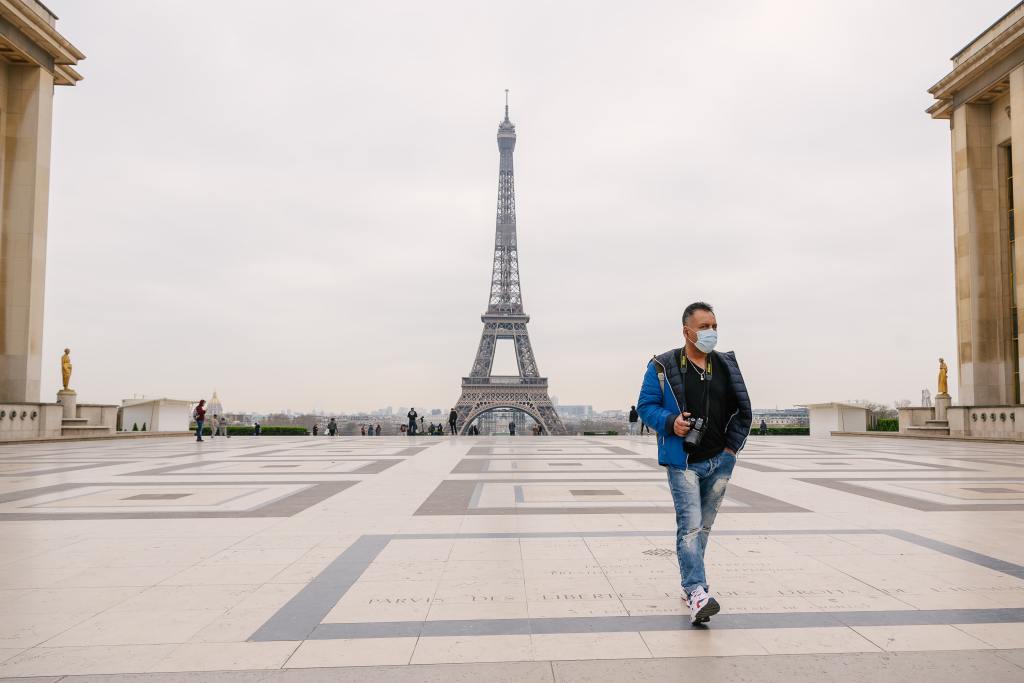
France is a european country known for its world renowned artistic culture, beautiful scenic cities, lush wineries, touristic sites, medieval castles, revolutionary roots and the war-torn entrenched history. The country where one greets another with ‘la bise’, a kiss on each cheek, has come face-to-face with the COVID-19 pandemic, which at first halted the economy with new rules, parameters and cultural changes. Now that the lockdown has slowly come to an end, the question remains as to the future of France, considering the pandemic is still lurking and ever present.
As of May 11, France began phase one of easing lockdown parameters, of the strict 55 day quarantine, in the mainland as well as in extended French territories, and the reopening of primary schools. As stated by the Prime Minister of France, Edouard Philippe, the coronavirus danger zone in Paris has been changed from ‘red’ to ‘orange,’ while the rest of France is ‘green’. This is good news considering on June 2, monuments, museums and parks in Paris will re-open and France will enter into the second phase of easing the lockdown, as well as allowing for the opening of restaurants, bars and cafes. Access to beaches, lakes and rivers will also be fully restored. As of now, major sports activities in France remain suspended until June 21.
These changes come as a result of the number of deaths each day decreasing. According to Statistica, there have been over 28,000 deaths, with over 186,000 confirmed cases of COVID-19. Significantly there have been more than 67,000 people who have recovered from the virus in France.
To provide some context, France, which is roughly 81% the size of the state of Texas, instituted a lockdown which required over 67 million people (only the non-essential workers) to stay in their place of residence, while needing a permission slip with a valid reason to leave the house. Those that violated the lockdown were fined.
Psychologically, everything is fine…we appreciate being with our children that we don’t usually see as much. It’s more complicated for children; the 5-year-old wants to see her teacher and her friends again.
Maud B.
During the lockdown, Christophe and Maud, a couple with two young children, shared that one positive of the lockdown was the simple rhythm that became normal, which provided less stress in the home. Maud stated, ‘Psychologically, everything is fine…we appreciate being with our children that we don’t usually see as much. It’s more complicated for children; the 5-year-old wants to see her teacher and her friends again.’ They were able to explain to their daughter the situation so that she understood the confinement without anxiety and allowed her to call her friends over the phone.
Considering all of the economic disaster that has been brought on from COVID-19, France has experienced its ups and downs, as it differs from other industrial countries on three main points that will be discussed next.
point une.
Before the pandemic, the government of France was already experiencing a period of strong divide from the ‘yellow vests,’ and discontent from the unions due to the pension. As outlined in an article from the Wall Street Journal, the yellow-vest rallies started in France on November 17, 2018, in protest of the hike in fuel taxes. The name ‘yellow-vest’ came from the high-visible yellow jackets that French drivers are required to keep in their vehicle in case of a roadside emergency. These protests were seen throughout all of France and were heightened in the news throughout the world.
As well, the pension strike, which escalated in December of 2019, put a halt to public transportation. Schools were closed and many people stayed at home to work. As quoted in the New York Times, the French pension system has a redistributive, pay-as-you-go structure that functions like group insurance. Full benefits are earned after 41 years to 43 years of contributions, depending on when workers were born, but they can retire earlier than the legal age of 62 without full benefits. This brief shutdown (pre-pandemic) made a minimal impact on the economy, yet it was nothing in comparison to the economic effects of the COVID-19 lockdown, which would be revealed just months later.
point deux.
In the face of COVID-19, and the rise in unemployment, the government of France implemented a generous support system for various industries by compensating more than 12 million employees up to 84% of their salary through temporary unemployment. Temporary unemployment was provided to citizens who lost their jobs, and to those who received reduced working hours. Such industries include the renowned tourism industry which was abruptly brought to a halt with the closing of borders and international flights.
The tourism industry, for example, has come to a complete standstill and many small companies will not survive the crisis.
Christophe C.
The economic crisis has been felt especially for hotels, restaurants and all places welcoming the general public. This reality has been known to Christophe, a salesman in the Parisian luxury tourism industry, who was laid off since the start of the lockdown and has been a beneficiary of the temporary unemployment. ‘The tourism industry, for example, has come to a complete standstill and many small companies will not survive the crisis,’ Christophe shared. This benefit has helped his household as he is able to continue to pay bills and provide for his family. Yet the question remains of when he can get back to work.
As of recent, the government has lifted the nationwide 100 km (60 mile) travel restriction. Even with the lessening of the lockdown, tourism is still on hold. According to the French Interior Minister Christophe Castaner the closing of the borders will remain into effect until June 15. From now until at least July 24, anyone who enters the country, with the exception of EU citizens (of the Schengen area) or arrivals from the UK, will be subject to a compulsory 14-day coronavirus quarantine. It has been shared that Paris’s Orly airport will resume operations on June 26.
On the contrary, the digital world is doing very well. Maud, an office manager, works in the digital learning industry. The digital industry by far has taken off, enabled by the lockdown, thus creating a demand for e-learning for K-12, universities, and employees in France and throughout the world. She continues to work from home and continues to receive her pay and benefits as provided by her employer.
My professional activity, interventions with nursing teams, social and medico-social workers, training and teaching actions, have been reduced to zero, resulting in a significant reduction to my income.
elian d.
On the other hand, Elian D., a 72 year old retired psychologist, who still practices on the side in France has seen a decline in his operations due to the COVID-19 lockdown. ‘My professional activity, interventions with nursing teams, social and medico-social workers, training and teaching actions, have been reduced to zero, resulting in a significant reduction to my income,’ stated Elian. He went on to share that his activities within the framework of associations of psychologists and psycho sociologists, working groups, conferences, symposia, have also been postponed.
Elian has managed to stay busy working as an independent expert on healthcare, social and medico-social establishments, training with teams of professionals, research on psychology issues, and work with Leroy Merlin France. As well, he is staying busy with his writing and publications which are doable at home. The most recent publication is in collaboration with Doctor Françoise Corvazier, titled: ‘The PMI institution, between the subject’s clinic and public policy;’ which discusses the efforts of the Maternal and Child Protection (PMI) in its fight against infant mortality and further solutions in public health policy.
While it seems that a decrease in the psychological field may have been impacted during the pandemic, one may predict that this industry may bounce back sooner than later. The stress of living through the strict parameters of the pandemic has brought mental health to the spotlight all over the world. As the lockdown eases in France, there may be an increased demand for psychologists for first responders, doctors, nurses and many other employees of different industries that were drastically affected.
point trois.
Speaking of the healthcare system, for almost 30 years, there has been a gradual weakening of the healthcare system in France. This decline has been reflected in the reduction of budgets, freezing of salaries, and the closing of beds due to lack of staff. According to the World Health Organization, France’s healthcare system, which includes doctors, nursing, midwifery, dentistry, speech pathology and physiotherapy, is regulated by the numerus clausus, which is set by the government annually and controls access to the second year of study in medical schools. This numerus clausus is then applied at the regional level, taking into account current inequalities in the geographic distribution of doctors.
As of January 2020, there were ten months of striking by hospital staff threatening to resign, while in demand for an increase in the national budget of health for an improvement in the work salaries, change of the governance of the hospital boards, and the need for more staff. The decline in the French healthcare system has considerably hampered the fight against the virus. Similar to other countries, France was unprepared for the widespread impact of the virus. As reiterated above, the hospitals did not have enough doctors and nurses, and resources in order to address the crisis and assist those infected efficiently.
Nevertheless, and perhaps too late, at the beginning of the lockdown, President Macron promised immediate bonuses and pay raises for the healthcare workers and a “massive investment plan” in the nation’s hospitals once the crisis ends. As of recent, Mr. Phillipe has stated that staff working in public hospitals and care homes in the hardest-hit regions will be paid a €1,500 ($1,650; £1,350) bonus and promised that further pay hikes as part of planned healthcare reforms.
Overall, I have confidence in the French healthcare system, despite some failures.
Elian D.
Yet while this comes as good news for the healthcare system, the criticism continues to ring in against the administration. According to Politico, commentators, right and left, have compared France’s response to COVID-19 to its “strange defeat” by Germany in 1940 – a phrase coined by French historian Marc Bloch, who argued that lazy certainties and mutual hostility between right and left politics in the 1930’s created an instinctive defeatism in France that made German victory possible.
This comparison may be a result of President Emmanuel Macron’s delayed response to the necessary enhancements in the healthcare system in France, which has been brought to the forefront due to COVID-19. Discontent has continued in regard to the government’s testing strategy, and the shortage of masks and respirators, early on in the crisis; and it continues on today. According to Elian, ‘Overall, I have confidence in the French healthcare system, despite some failures.’ He remains optimistic that despite the discontent of the healthcare system, that things will get better.
en conclusion.
These three points create a general overview of present day France, the economy and some of its winners and losers in various french industries. ‘We are in a better place than where we expected to be,’ stated the Prime Minister Edouard Philippe, as it pertains to the easing of the lockdown. One can hope that as the COVID-19 lockdown phases out, that the people and the government of France will continue to take the threat of the virus seriously, and continue in the practice of social distancing, despite the decrease in numbers of those dying each day.
The great fear is that of contagion by asymptomatic cases.
Maud B.
While Christophe and Maud are happy to see the lockdown ease, they are still concerned for the wellbeing of their family and the nation. ‘The great fear is that of contagion by asymptomatic cases. We see the future positively. We hope that the virus will disappear little by little and that we will be able to put the children back to school in September without worry; we suspect that we will have to continue living with the virus for a very long time,’ stated Maud. Elian shares similar concerns and further sees in the near future a difficult economic, social and political crisis, and with potential risk of recontamination.
As the popular French quote says, ‘Qui Vivra Verra, ’ meaning ‘only time will tell’ or ‘she/he that lives will see,’ for France only time will tell how the economy, mental health of its citizens and the how the government of France recovers from this pandemic era, as life goes back to a new type of normal and as the pre-Covid concerns and discontent resumes. As history shows, the French people are resilient and inevitably COVID-19 will not keep them down for too much longer.
This article was written by Alain Benichou and LaTrice Benichou, collaborating contributors on behalf of Benichou Global Insights. With a realm of expertise that spans across the non-profit, public, corporate and international sectors, Benichou Global partners with you to produce meaningful change that inspires and innovates. If you liked what you read, please share and subscribe for more Insights from Benichou Global.
To become a contributing writer for Benichou Global Insights, email at bg@benichouglobal.com.
 Benichou Global Insights